 ESUDO
ESUDO
Training ends on the day the certificate is handed over. That is where most livelihood programmes stop, and it is why most of them fail.
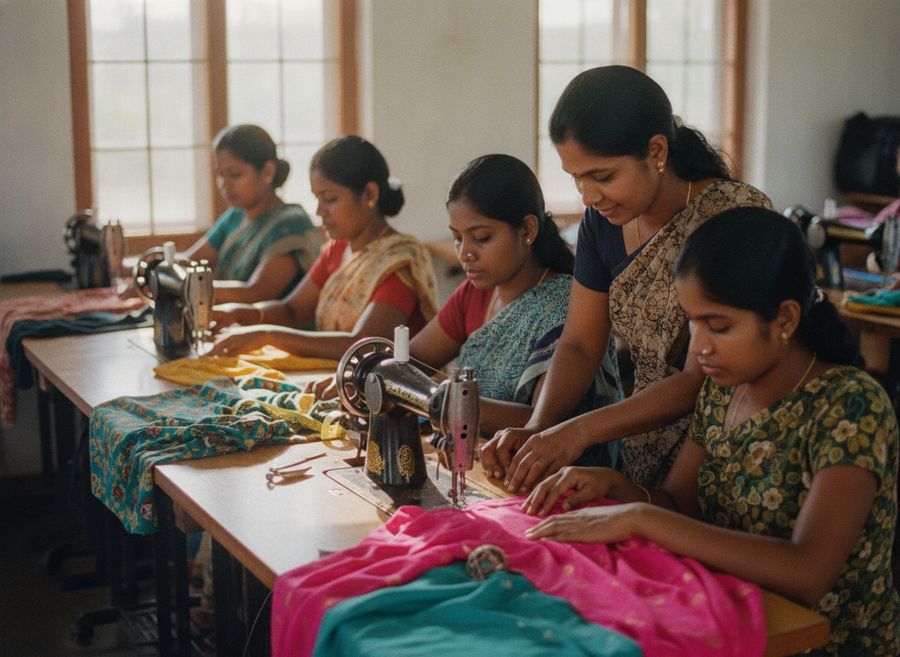
The workshop runs for eleven weeks: tailoring, food processing, basic costing and pricing. Twenty-two women from four villages are in the current intake, Tamil and Muslim, most of them managing a household on a single irregular income.
What happens afterwards matters more. Each graduate leaves with a small grant toward a machine or stock, and a mentor she can call for the first year. Six months on, sixteen of the last intake were still trading.
"I knew how to sew before I came," one graduate said. "What I did not know was what to charge. I was losing money on every school uniform and I could not see it."
Costing is the part participants say changed the most. Several now supply uniforms to two schools and have taken on work from neighbours who used to travel into town for it.
The next intake opens in January. Priority goes to households with no salaried earner, and places are shared evenly between communities.